World*s second oldest juma mosque is in India
|
|
Browsing through the annals of the royal family of the Samudris (Zamorins to western historians) the traditional rulers of north Kerala from 7th century A.D to British days, I was intrigued by one paragraph, which stated There is the practice of receiving pan (betel leaf) from a Muslim woman when the King Samudri ascends throne for the first time and telling her I shall guard the sword (kingship) until my uncle returns from Makkah.This custom continued until 1890s.Why a Muslim women be given that assurance? I mused, and checking with historians found, that in India, in the 1377-year-old (built in Hijra 7 or 629 A.D.) Cheraman Juma Masjid in Kodungaloor-Kerala, we have Indias oldest Islamic shrine.
More important is the fact that it is the world's second oldest Juma mosque, where the Juma (Friday) prayers have been held for the last 1377 years, since the days of Prophet Mohammed (570-634 A.D.). The first Juma mosque in the world is the Prophet's Mosque in Madinah, which is also his memorial tomb.Kodungaloor was the capital of the kings of Kerala, and in 622-628 A.D. (Hijra 1 to 7) the ruler was a great savant, by name Cheraman Perumal Bhaskara Ravi Varma. In those days, the seniormost of the rulers of Kerala was called as Cheraman Perumal. It was here that he was visited by certain Mohammadan pilgrims, who according to tradition, succeeded in inducing the Perumal to turn Mohammadan and undertake the Haj. On the eve of his renunciation of religion, empire and embarkation for Makkah, he is reputed to have distributed Kerala among the many Hindu princes whose scions ruled it until 1947. The founder of the Samudri dynasty, a nephew of the departing monarch, was one of the beneficiaries. Hence it became obligatory for all his descendants to assert to the Muslim woman as representative of the religion to which the Perumal had converted himself, that the new ruler was only the agent of the Perumal. Why did the Perumal convert himself into a follower of Prophet Mohammed  M. Hamiddullah writes in Mohammed Rasoolullah, quoting some old manuscripts from India Office Library (ref no. Arabic, 2607, 152-173) Vol.16 (06): There is a very old tradition in Malabar, southwest Coast of India that Chakrawati Farmas (perhaps another name for denoting Cheraman Perumal) one of their kings, had observed splitting of the moon, the celebrated miracle of the Holy Prophet at Makkah, and learning on inquiry that this was a symbol of the coming of a Messenger of God from Arabia, he appointed his nephew regent and set out to meet him. The love for Holy Prophet grew in his heart and he became the earliest Muslim convert of present day India. M. Hamiddullah writes in Mohammed Rasoolullah, quoting some old manuscripts from India Office Library (ref no. Arabic, 2607, 152-173) Vol.16 (06): There is a very old tradition in Malabar, southwest Coast of India that Chakrawati Farmas (perhaps another name for denoting Cheraman Perumal) one of their kings, had observed splitting of the moon, the celebrated miracle of the Holy Prophet at Makkah, and learning on inquiry that this was a symbol of the coming of a Messenger of God from Arabia, he appointed his nephew regent and set out to meet him. The love for Holy Prophet grew in his heart and he became the earliest Muslim convert of present day India.This Moon Splitting is also mentioned in the hadith. As per narrations of Abdullah bin Masud: During the lifetime of the Prophet, the moon was split into two parts and on that the Prophet said, Bear witness (to thus). (Translation of Sahih Bukhari, Virtues and Merits of the Prophet and his Companions, Volume 4, Book 56, Number 830) To continue with the words of Hamidullah, Cheraman Perumal embraced Islam at the hand of Prophet. A tradition of the Holy Prophet has also been reported from one of the companions, Abu Saeed Al Khudri,(r.a) regarding the arrival of Cheraman Perumal a king from India presented the Messenger of God with a bottle of pickle that had ginger in it. The Holy Prophet distributed it among his companions. I also received a piece to eat. It is said that, after conversion, the Perumal took the name of Tajuddin,(r.a) while other chroniclers say that he called himself as Abdullah Samudri, in remembrance of his past. He married the sister of the then king of Jeddah and settled down there. He handed over to the king of Jeddah several letters addressed to the ruler of Kodungaloor (then known as Muzuris), seeking his help to propagate the tenets of Islam. Later, unfortunately, when returning to Kerala, on directives of the Prophet, Tajuddin died at the port of Zafar, Yemen, (salalah in oman)where the tomb of the Indian king was piously visited for many centuries. But he had asked his companions, among whom there were a number of senior disciples of Prophet Mohammad, to continue their journey to Kerala. One Islamic scholar has written that Perumal followers built the mosque after reaching Kerala. The Cheraman Juma Masjid was built by Malik bin Dinar, (one of the 13 followers of Prophet Mohammad), who reached the ancient port of Musuris on the spice route in Malabar in 629 A.D. Cheraman Perumal had given a letter to the Rajah of Kodungaloor, who helped Malik bin Dinar to convert the Arathali temple into a Juma Masjid. As such this mosque was one, designed and constructed based on Hindu art and architecture. It has a unique speciality. Mosques all over the world face the direction of Makkah, but this particular one faces east, as it was built originally as a Hindu shrine, all of which face the east. This is the second Juma Mosque in the world, where Friday prayers have been offered since 1365 A.D./Hijra 7. It is situated in the Mrthala village of Kodungaloor, hardly 20km from the Irinjalakuda railway station in Kerala. Unlike any other mosques in India, the Cheraman mosque uses a traditional brass oil lamp, mostly found in Hindu temples. The pulpit from where the chief priest gives Friday sermons is made of rosewood with carvings similar to those in temples. There are two tombs, that of Bin Dinar and his sister inside the mosque, where preachers light incense sticks, yet another Hindu practice. Until 1984, for 1355 years, the Cherman Perumal Mosque retained its facade as a typical Kerala structure. In 1984, the local Muslim Jamaat, which repaired the building, decided, that the new structure should be more like a Islamic shrine with minarets. While retaining the inner configuration of the edifice, the exterior was changed completely. As one member of the Indian National Trust for Art & Cultural Heritage told me that in 1984 the trust was formed to protect the Indian heritage, from such radical alterations. But by 1984, the mosque had been given a new exterior. Otherwise the trust would have appealed and ensured that the 1355 old facade of the structure (although repaired many times) was kept in its old grandeur.  |

Friday, November 15, 2013
ISLAMIC HISTORY OF KERALA

ISLAMIC HISTORY
*Thajuddin (R.A)*
 known as*cheraman perumal* known as*cheraman perumal* |
The First Indian to accept Islam
|

Cheraman Perumal, (Tajuddin. r.a) king of india-Kodungallur, Kerala (AD 622-628. Hijra 1-7) was the first Indian to accept Islam. Many historians have recorded this fact in their writings. Kerala is a state of India. The state stretches for 360 miles (580 kilometers) along the Malabar Coast on the southwestern side of the Indian peninsula. King Chakrawati Farmas of Malabar was a Chera king, Cheraman perumal of Kodungallure. He is recorded to have seen the moon split. The incident is documented Hamidulla writes in "Muhammad Rasoolullah in a manuscript kept at the India Office Library, London, reference number: Arabic, 2807, 152-173 A group of Muslim merchant passing by Malabar on their way to China spoke to the king about how God had supported the Arabian prophet with the miracle of splitting of the moon. The shocked king said he had seen it with his own eyes as well, deputized his son, and left for Arabia to meet the Prophet in person. He embraced Islam at the hand of the Prophet and when returning home, at the direction of the Prophet, died at the port of Zafar, Yemen,(Present salalah Oman) where the tomb of the Indian king was piously visited for many centuries.
in a manuscript kept at the India Office Library, London, reference number: Arabic, 2807, 152-173 A group of Muslim merchant passing by Malabar on their way to China spoke to the king about how God had supported the Arabian prophet with the miracle of splitting of the moon. The shocked king said he had seen it with his own eyes as well, deputized his son, and left for Arabia to meet the Prophet in person. He embraced Islam at the hand of the Prophet and when returning home, at the direction of the Prophet, died at the port of Zafar, Yemen,(Present salalah Oman) where the tomb of the Indian king was piously visited for many centuries.Tuesday, October 1, 2013


HAJJ
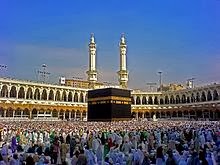
Hajj (Arabic: حج Ḥaǧǧ "pilgrimage") is an Islamic pilgrimage to Mecca and the largest gathering of Muslim people in the world every year. It is one of the five pillars of Islam, and a religious duty which must be carried out by every able-bodied Muslim who can afford to do so at least once in his or her lifetime.The state of being physically and financially capable of performing the Hajj is called istita'ah and a Muslim who fulfils this condition is called a mustati. The Hajj is a demonstration of the solidarity of the Muslim people, and their submission to God (Allah in the Arabic language).
The pilgrimage occurs from the 8th to 12th Dhu al-Hijjah, the 12th and last month of the Islamic calendar. Because the Islamic calendar is a lunar calendar, eleven days shorter than the Gregorian calendar used in the Western world, the Gregorian date of the Hajj changes from year to year. Ihram is the name given to the special spiritual state in which Muslims live while on the pilgrimage. The calendar is from 8th to 12th because that's the calendar of the Muslims.
The Hajj is associated with the life of the Islamic Prophet Muhammad from the 7th century, but the ritual of pilgrimage to Mecca is considered by Muslims to stretch back thousands of years to the time of Abraham (Ibrahim). Pilgrims join processions of hundreds of thousands of people, who simultaneously converge on Mecca for the week of the Hajj, and perform a series of rituals: Each person walks counter-clockwise seven times around the Ka'aba, the cube-shaped building which acts as the Muslim direction of prayer, runs back and forth between the hills of Al-Safa and Al-Marwah, drinks from the Zamzam Well, goes to the plains of Mount Arafat to stand in vigil, and throws stones in a ritual Stoning of the Devil. The pilgrims then shave their heads, perform a ritual of animal sacrifice, and celebrate the three day global festival of Eid al-Adha.
History
he Hajj is based on a pilgrimage that was ancient even in the time of Muhammad in the 7th century. According to tradition, elements of the Hajj trace back to the time of Abraham (Ibrahim), around 2000 BCE. Abraham's wife, Sarah, was unable to conceive, and upon her request, Abraham had taken their female servant, Hagar, as a second wife. Hagar bore Abraham a son, Ishmael. It is believed that Abraham was ordered by God to leave Hagar (Hājar) and Ishmael (ʼIsmāʻīl) alone in the desert. Looking for shelter, food and water, Hagar ran back and forth between the hills of Safa and Marwa seven times with her son. In desperation, she laid the baby on the sand and begged for God's assistance. The baby cried and hit the ground with his heel (some versions of the story say that the angel Gabriel (Jibrail) scraped his foot or the tip of his wing along the ground), and the Zamzam Well miraculously sprang forth.
In 630 CE, Muhammad led his followers from Medina to Mecca, it was the first Hajj to be performed by Muslims alone, and the only Hajj ever performed by Muhammad. He cleansed the Kaaba, destroyed all the idols, and re-ordained the building as the house of God. It was from this point that the Hajj became one of the Five Pillars of Islam.
Performing Hajj was a hazardous journey for early pilgrims; Ibn Jubayr noted the skeletons of pilgrims who had died of thirst during the journey. In the seventeenth century a group of Egyptian pilgrims lost over 1,500 people and 900 camels. In 1924 around one-fifth of a group of Syrian pilgrims died and two years later 12,000 are thought to have died during the journey.
Preparations
See also: Ihram
During the Hajj, male pilgrims are required to dress only in the ihram, a garment consisting of two sheets of white unhemmed cloth, with the top draped over the torso and the bottom secured by a white sash; plus a pair of sandals. Women are simply required to maintain their hijab—normal modest dress, which does not cover the hands or face.
The Ihram is meant to show equality of all pilgrims, in front of God: there is no difference between a prince and a pauper. Ihram is also symbolic for holy virtue and pardon from all past sins. A place designated for changing into Ihram is called a Miqat ( like Zu 'l-Hulafa, Juhfa, Qarnu 'l-Manāzil, Yalamlam, Zāt-i-'Irq, Ibrahīm Mursīa).
While wearing the Ihram, a pilgrim may not shave, clip their nails, wear perfume, swear or quarrel, have sexual relations, uproot or damage plants, kill or harm wild animals, cover the head [for men] or the face and hands [for women], marry, wear shoes over the ankles, or carry weapons.
Sunday, January 15, 2012
ഇമാം നവവിയുടെ ഹദീസ് (1) Imam Navavi Hadees(1)
عَن أمير الْمؤمِنينَ أبي حَفصٍ عُمر بْن ا لخطَاب رضي اللهُ عنه
വിശ്വാസികളുടെ നായക൯ അബുഹഫ്സ് ഉമറുബ്നുല്ഖാത്തബി(റ)ല് നിന്ന് നിവേദനം.
On the authority of the commander of the faithful Abu Hafsa Umar Kattab (May Allah be pleased with him)
قال: سمعت رسول الله (ص) يقول
അദ്ദേഹം പറഞ്ഞു: അല്ലാഹുവിന്റെ ദൂതര് പറയുന്നത് ഞാന് കേട്ടു.
He said, I heard the messenger of Allah (The blessings and peace of Allah be upon him) say.
وإنما لكل ا مري مانوي
ഇതൊരു വ്യക്തിക്കും അവനുദ്ധെശിച്ചത് മാത്രമാണ് ലഭിക്കുക.
Every man shall have but that which he intended.
فمن كانت مجرته إلى الله ور
ആരെങ്കിലും പലായനം ചെയുന്നത് അല്ലഹുവിലേക്കും അവന്റെ ദൂതങ്കലേക്കും ആണെങ്കില്
Thus he who’s Hijra (migration) is for Allah and His Messenger.
فهجرته إلى الله ورسوله
അവന്റെ പലായനം അല്ലാഹുവിങ്കലേക്കും അവന്റെ ദൂതങ്കലേക്കും തന്നെ ആയിരിക്കും
His Migration is for Allah and His Messenger.
ومن كانت مجرته لدنيا يصيبها
ആരുടെയെങ്കിലും പലായനം ഭൗതിക നേട്ടങ്ങള്ക്ക് വേണ്ടിയാണെങ്കിലും അതവന് ലഭിക്കും.
And he whose migration is to achieve some worldly benefit.
أوامرأة كنسكيحها
ആരെങ്കിലും പലായനം ചെയ്യുന്നത് ഒരു പെണ്ണിന് വേണ്ടിയാണെങ്കില് അവന് അവളെ വിവാഹം ചെയ്യു.
Or to take some woman in marriage.
فهجرته إلى ما هاجر إليه
ചുരുക്കത്തില് ഒരാള് എന്തിന് വേണ്ടിയാണോ ഹിജ്ര ചെയ്തത് , അതിലയിരിക്കും അയാളുടെ ഹിജ്ര എത്തിച്ചേരുന്നത്.
His migration is for that for which he migrated.
رواه ال بجاري ومسلم
ബുഖാരിയും മുസ്ലിമും ഇത് ഉദ്ദസിചിരിക്കുന്നു.
Related by Bukhari and Muslim
Saturday, January 7, 2012
Wednesday, January 4, 2012
Tuesday, January 3, 2012
Saturday, December 31, 2011
Boy & King
In Surah Al-Burooj, Allah Ta'ala mentions about the people of the trench. Their story is recounted in a hadith reported by Imam Muslim (rah) as follows:
There was an infidel king who lived in bygone times. He had a soothsayer, or according to some narrations, a magician. The infidel king is identified as the ruler of Yemen. His name according to ibn Abbas  , was Yusuf Dhu Nuwas, and he lived about 70 years before the birth of Rasulullah
  . The soothsayer said to the king that he should be given an intelligent boy, so that he could train him in the skill of foretelling or the black magic. Accordingly, the king sent a boy, Abdullah bin Tamir by name, to be trained by the soothsayer.
, was Yusuf Dhu Nuwas, and he lived about 70 years before the birth of Rasulullah . The soothsayer said to the king that he should be given an intelligent boy, so that he could train him in the skill of foretelling or the black magic. Accordingly, the king sent a boy, Abdullah bin Tamir by name, to be trained by the soothsayer. Whenever the boy went to his teacher, he had to pass by a Christian monk. He followed the true religion of Isa  and worshipped Allah. Since the religion of Isa was the true religion in those days, the monk was, in fact, a Muslim. The boy sat with the monk and was very much impressed with his teachings. As a result, he frequented the monk's house and sat with him for long hours before proceeding to his teacher. Ultimately he had accepted Islam. Allah had blessed with such a strong faith that he was prepared to bear any pain and persecution for the sake of Allah. His teacher used to beat him for coming late.
and worshipped Allah. Since the religion of Isa was the true religion in those days, the monk was, in fact, a Muslim. The boy sat with the monk and was very much impressed with his teachings. As a result, he frequented the monk's house and sat with him for long hours before proceeding to his teacher. Ultimately he had accepted Islam. Allah had blessed with such a strong faith that he was prepared to bear any pain and persecution for the sake of Allah. His teacher used to beat him for coming late. On his way back from the occult teacher, he used to spend some time again with the monk and used to go home late. The family would then beat him up for being late. But he was so keen to have the company of the monk without fear of persecution. Through the blessings of this, Allah had gifted with many miracles [kiramah[.
Once a lion had blocked the path and prevented people from passing. They were perturbed. He picked up a stone and prayed, "Oh Allah! If the religion of the Monk is true, then kill this beast with this stone [so that people may pass]. And if the soothsayer or magician is true, then the beast must not die with my stone." So praying, he aimed at the lion and it died instantly. The news spread amongst the people that the boy possesses wonderful knowledge. A blind man heard about this and came up to him. He requested him to restore his sight. The boy conceded on the condition that he embraces Islam. The blind man agreed. The boy prayed and Allah restored his sight. The blind man became muslim.
The king came to know about these incidents, and he got the boy, the blind and the monk apprehended. They were brought before the king. He got the blind and the monk killed, and ordered that the boy be taken to the summit of a mountain and be thrown from there. But those who had taken him up there fell and died. The boy went home safely. Then the king ordered for him to be drowned in the sea. The boy escaped safely, while the people who took him to the sea were drowned.
The boy then himself told the king how to kill him. He told him to take an arrow from his quiver and place it in his bow, and reciting, "Bismillahi Rabbi" "In the name of Allah, my lord' they should shoot. They did that and the boy finally died. In this way the boy gave his life away, but seeing this the entire nation of the king cried out spontaneously: "We believe in Allah." At this the king was greatly enraged and after consultation with his cabinet, ordered for deep trenches to be dug and filled with fire.
An announcement was made that people should renounce their faith with Allah. If they refuse, they would be thrown into the fiery furnace. Eventually, a woman carrying her infant child was brought to a trench, but she hesitated. Allah granted speech to her child, who said: "O Mother, be steadfast, because you are certainly on the truth." In this way, may people were burned. According to some reports, about twelve thousand people were burned to ashes and, according to other reports, the number is more than this.
In a narration of Muhammed Ibn Ishaq, it is reported that the place where the boy Abdullah ibn Tamir was buried had to be dug up for some important reason during the time of Sayyidina Umar . It was found that the body of Abdullah ibn Tamir was intact and he was sitting up. His hand was placed on his hip joint, where the arrow struck him. Someone moved the hand out from that place, and his wound started bleeding. When the hand was placed back the bleeding stopped. There was a ring in his finger which had the inscription, "Allah is my lord." The governor of Yemen informed Sayyidina Umar about this, and he wrote back in reply: "Bury the body back as it was with his special finger."
. It was found that the body of Abdullah ibn Tamir was intact and he was sitting up. His hand was placed on his hip joint, where the arrow struck him. Someone moved the hand out from that place, and his wound started bleeding. When the hand was placed back the bleeding stopped. There was a ring in his finger which had the inscription, "Allah is my lord." The governor of Yemen informed Sayyidina Umar about this, and he wrote back in reply: "Bury the body back as it was with his special finger." MUHARRAM
Meaning of the word "Muharram" : - The word Muharram means "Forbidden."
About the Month of Muharram : - Muharram is the month with which the Muslims begin their lunar Hijrah Calendar. It is one of the four sanctified months about which the Holy Quran says, "The number of the months according to Allah is 12(mentioned) in the Book of Allah on the day in which He created heavens and the earth. Among these 12 months, there are 4 that are sanctified.
Fasting during the month : -
Rasulullah has said, "The best fasts after the fasts of Ramadan are those of the month of Muharram."
has said, "The best fasts after the fasts of Ramadan are those of the month of Muharram."Although the fasts of the month of Muharram are not obligatory, yet, the one who fasts in these days out of his own accord is entitled to a great reward by Allah Ta'aala. The Hadith cited above signifies that the fasts of the month of Muharram are most rewardable ones among the Nafl fasts.
There are many bounties of this month, especially the 10th of Muharram a.k.a. "Ashura".
According to the Ibn Abbas, when Rasulullahmigrated to Madinah, found that the Jews of Madinah used to fast on the 10th day of Muharram. They said that it was the day on which Musaand his followers crossed the Read Sea miraculously and Firawn was drowned in its water. On hearing this from the Jews, Rasulullah said, "We are more closely related to Musa than you," and directed the Muslims to fast on the day of "Ashura."
, when Rasulullahmigrated to Madinah, found that the Jews of Madinah used to fast on the 10th day of Muharram. They said that it was the day on which Musaand his followers crossed the Read Sea miraculously and Firawn was drowned in its water. On hearing this from the Jews, Rasulullah said, "We are more closely related to Musa than you," and directed the Muslims to fast on the day of "Ashura."Two of the many virtues of the 10th of Muharram
1) On this day he who spends more lavishly for the sake of his family members, Allah Ta'aala will bestow blessings upon the sustenance of the following year.
2) Abu Qataada has related that Rasulullahhas reported to have said, "It is my thought that by fasting on the 10th of Muharram, Allah Ta'aala will pardon the sins of the past year." [Tirmidhi]
has related that Rasulullahhas reported to have said, "It is my thought that by fasting on the 10th of Muharram, Allah Ta'aala will pardon the sins of the past year." [Tirmidhi] Events of Muharram:
1) Hadhrat Hussain was martyred on this month.
was martyred on this month.2) Shaykain Tirmidhi & Haakim has narrated from Anas that the following verse, "Allah may forgive thee of thy sins that which is past and that which is to come." (Al-Fath) was revealed on the 10th of Muharram.
that the following verse, "Allah may forgive thee of thy sins that which is past and that which is to come." (Al-Fath) was revealed on the 10th of Muharram.3) Rasulullah went to defeat Bani Muhaarin and Bani Tha'laba (Tribes of Bani Gatfan) in the year 4 A.H.
went to defeat Bani Muhaarin and Bani Tha'laba (Tribes of Bani Gatfan) in the year 4 A.H.
Subscribe to:
Posts (Atom)